Description
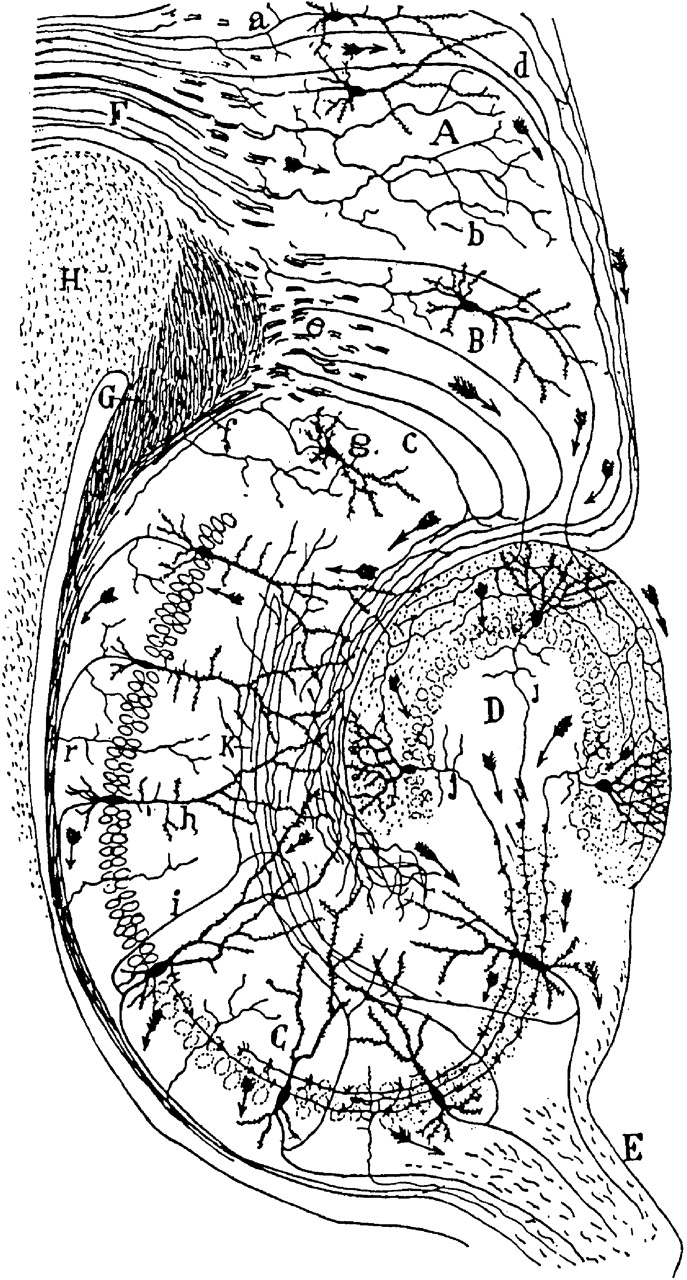
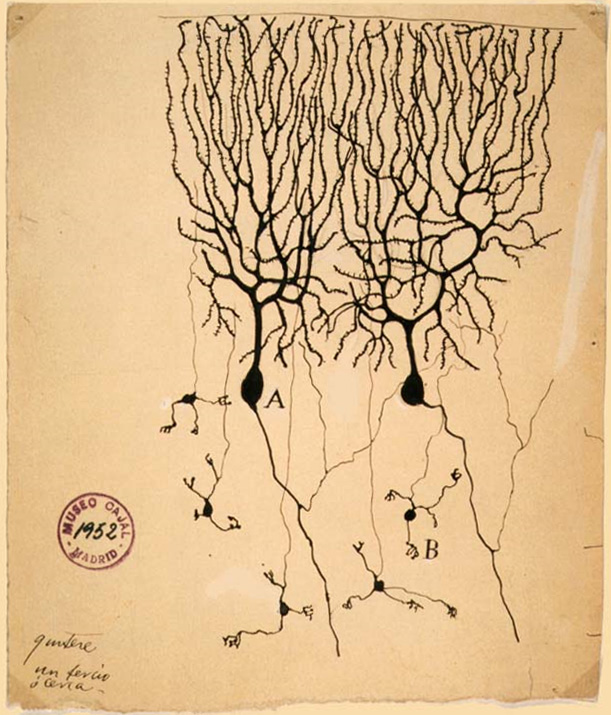
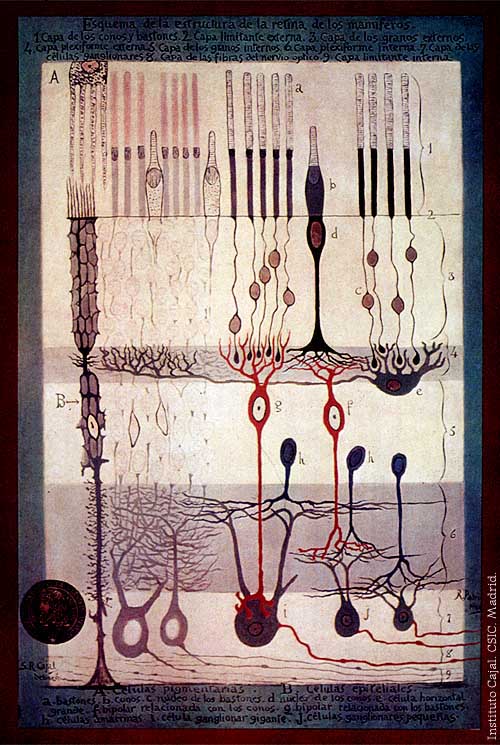
Hand-drawn illustrations of neurons and brain tissue by Spanish neuroscientist Santiago Ramón y Cajal (1852-1934), Nobel laureate in Physiology or Medicine (1906, shared with Camillo Golgi). Considered the father of modern neuroscience, Cajal used Golgi's silver staining technique and his own modifications to reveal individual neurons under the microscope, then drew what he saw with extraordinary precision and artistry. His detailed ink and pencil drawings — of Purkinje cells, pyramidal neurons, retinal layers, and hippocampal circuits — proved the "neuron doctrine": that the nervous system is composed of discrete individual cells rather than a continuous network. His nearly 3,000 drawings are held by the Cajal Institute in Madrid and were exhibited at MIT and the Grey Art Gallery.