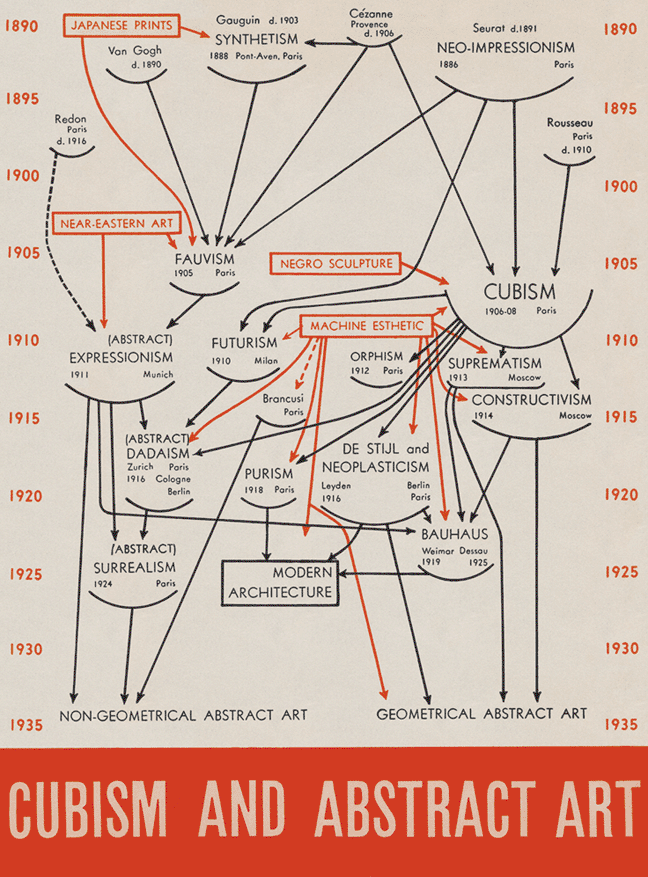
Description
Prepared for the influential exhibition Cubism and Abstract Art (at the Museum of Modern Art) in 1936. … [The chart] serves as an organizing history of modern art displayed throughout the museum [...]. … Nouns (schoo, artists, places) are mapped on a grid of time (moving downwards, 1890 to 1936) and type of art (somewhat geometric at right, less so at left). ... Like names of cities of different sizes on maps, these nouns vary in size, in proportion to artistic relevance. ... Paths of artistic influence—the verbs of this analysis—are shown by 51 links (49 solid lines, 2 dotted). Every arrow represents a causal claim, an assertion about the existence, direction and timing of influence. ... Based on single-headed vertical arrows, the idea of causality in the chart is naive: causality only flows one way, without the back-and-forth possibility of mutual exchange. There are no horizontal double-headed arrows at all, which would describe contemporaneous feedback among different schools of art. ... Information-presenting is and must be evidence-reasoning.